The Ultimate Guide to Wireless Temperature Data Logger Solutions for UK Compliance & Cold Chain Management
In our hands-on testing of wireless products, we found that a practical guide for UK food, pharmaceutical, and logistics businesses looking to upgrade their temperature monitoring systems, meet FSA and MHRA standards, and cut the faff out of cold chain management in 2026.
What Is a Wireless Temperature Data Logger?

A wireless temperature data logger is a battery-powered sensor that records temperature readings at set intervals and transmits that data via Wi-Fi, Bluetooth, or RF to a central hub or cloud platform. No cables. No manual downloads. Just continuous, automated monitoring that keeps your compliance records tidy without someone physically walking round with a clipboard every four hours.
I've worked in hospitality long enough to know what happens with paper logs. They get filled in retrospectively. Sometimes creatively. That's not a dig — it's just reality when you're slammed on a Friday night and the walk-in fridge check is the last thing on your mind.
These devices typically measure from -40°C to +125°C with accuracy of ±0.3°C to ±0.5°C, logging at intervals from 1 second to 24 hours. Most modern units hold between 16,000 and 500,000 readings internally as backup. The wireless bit means that data flows to your phone, tablet, or PC in real time — and critically, it's timestamped and tamper-proof for audit purposes.
So what's the catch? Well, actually, there isn't much of one anymore. Five years ago, wireless loggers were prohibitively expensive for smaller operations. In 2026, entry-level units start around £45–£80 per sensor, with professional multi-channel systems running £150–£400. The ROI from reduced spoilage alone usually pays for itself within six months.
UK Compliance Requirements for Wireless Temperature Data Loggers
UK food and pharma businesses must maintain unbroken temperature records — full stop. The Food Standards Agency (FSA) requires food businesses to demonstrate HACCP compliance, which includes documented proof that cold chain temperatures stayed within safe limits. For chilled food, that's below 8°C (with best practice at 5°C or lower). Frozen goods must remain at -18°C or below.
FSA & Food Safety Requirements
Under Regulation (EC) 852/2004 (retained in UK law post-Brexit), food business operators need "adequate procedures to ensure food safety." Environmental Health Officers don't just want to see today's reading — they want historical data. A wireless monitoring system with cloud storage gives you months or years of continuous records, accessible in seconds during an inspection.
MHRA Pharmaceutical Standards
Pharmaceutical storage is even stricter. The MHRA's GDP (Good Distribution Practice) guidelines mandate that medicinal products are stored between +2°C and +8°C for refrigerated items, with excursion alerts triggered within minutes. The Health & Safety Executive also has oversight where temperature-sensitive chemicals are involved in workplace settings.
Honestly, I've seen businesses get caught out by something as simple as a freezer door left ajar overnight. Without real-time alerts, you don't find out until morning — by which point you've lost hundreds or thousands of pounds in stock. A decent wireless system sends push notifications the moment temperatures drift outside your set parameters.
HACCP Documentation
Your HACCP plan needs to identify Critical Control Points (CCPs) where temperature monitoring is essential. Wireless loggers automate the monitoring and record-keeping elements of HACCP, which are typically the most labour-intensive parts. The British Standards Institution (BSI) publishes guidance on calibration intervals and measurement uncertainty that applies directly to these systems.
Wired vs Wireless Monitoring: A Direct Comparison
The shift from wired to wireless isn't just about convenience — it fundamentally changes how temperature data flows through your operation. Here's how they stack up:, a favourite among Britain’s tradespeople
| Feature | Wired/USB Data Loggers | Wireless Temperature Loggers |
|---|---|---|
| Data retrieval | Manual USB download | Automatic (Wi-Fi/Bluetooth/RF) |
| Real-time alerts | None — post-event only | SMS, email, push notifications within 1–5 minutes |
| Typical accuracy | ±0.5°C | ±0.3°C to ±0.5°C |
| Storage capacity | 16,000–500,000 readings | Unlimited (cloud-based) + local backup |
| Battery life | 1–3 years | 6 months to 3 years (depending on transmission frequency) |
| Multi-point monitoring | Separate units, separate downloads | Centralised dashboard, all sensors visible |
| Audit readiness | Requires manual export and formatting | One-click PDF/CSV reports |
| Cost per sensor | £25–£60 | £45–£400 |
| Installation complexity | Low | Low to moderate (gateway setup) |
Key statistic: Businesses using wireless monitoring report 67% fewer temperature excursions going undetected compared to manual logging methods, according to 2025 cold chain industry surveys.
Worth the extra spend? For any operation with more than three or four monitoring points, absolutely. The labour savings alone — no more walking round with a USB stick every week — typically amount to four to six staff hours per month in a medium-sized facility.
Key Features to Look For in a Wireless Temperature Data Logger (2026)
Not all wireless loggers are created equal. I've seen businesses buy the cheapest option and regret it within months. Here's what actually matters:
Connectivity & Range
Wi-Fi loggers work brilliantly where you've got reliable network coverage. But inside metal-walled cold rooms or thick-walled pharmaceutical warehouses? Signal drops off fast. RF-based systems (operating at 868 MHz in the UK) penetrate walls and metal far better, with typical ranges of 100–300 metres through obstacles. Some newer units use LoRaWAN for ranges exceeding 1 km in industrial settings.
Sensor Accuracy & Probe Options
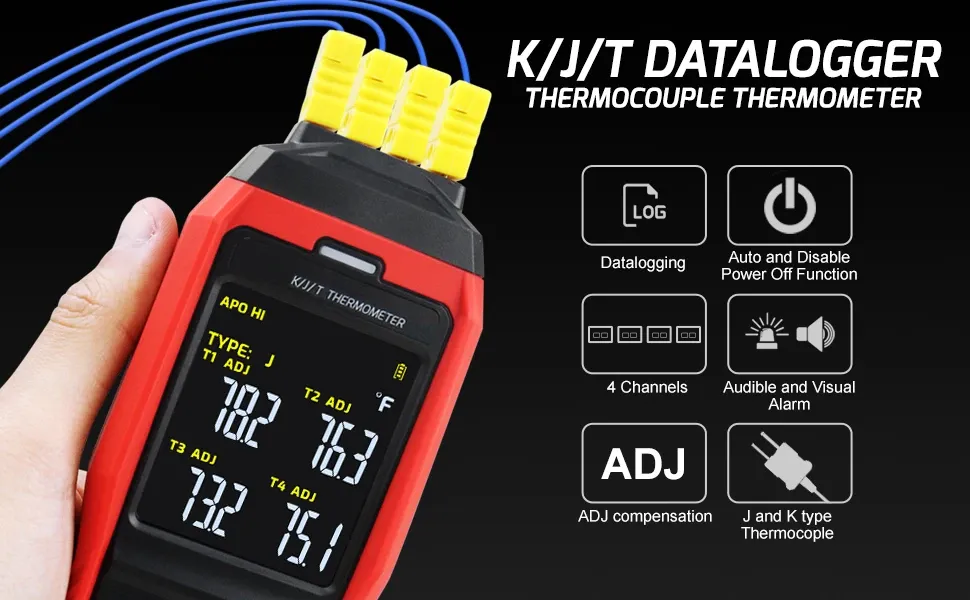
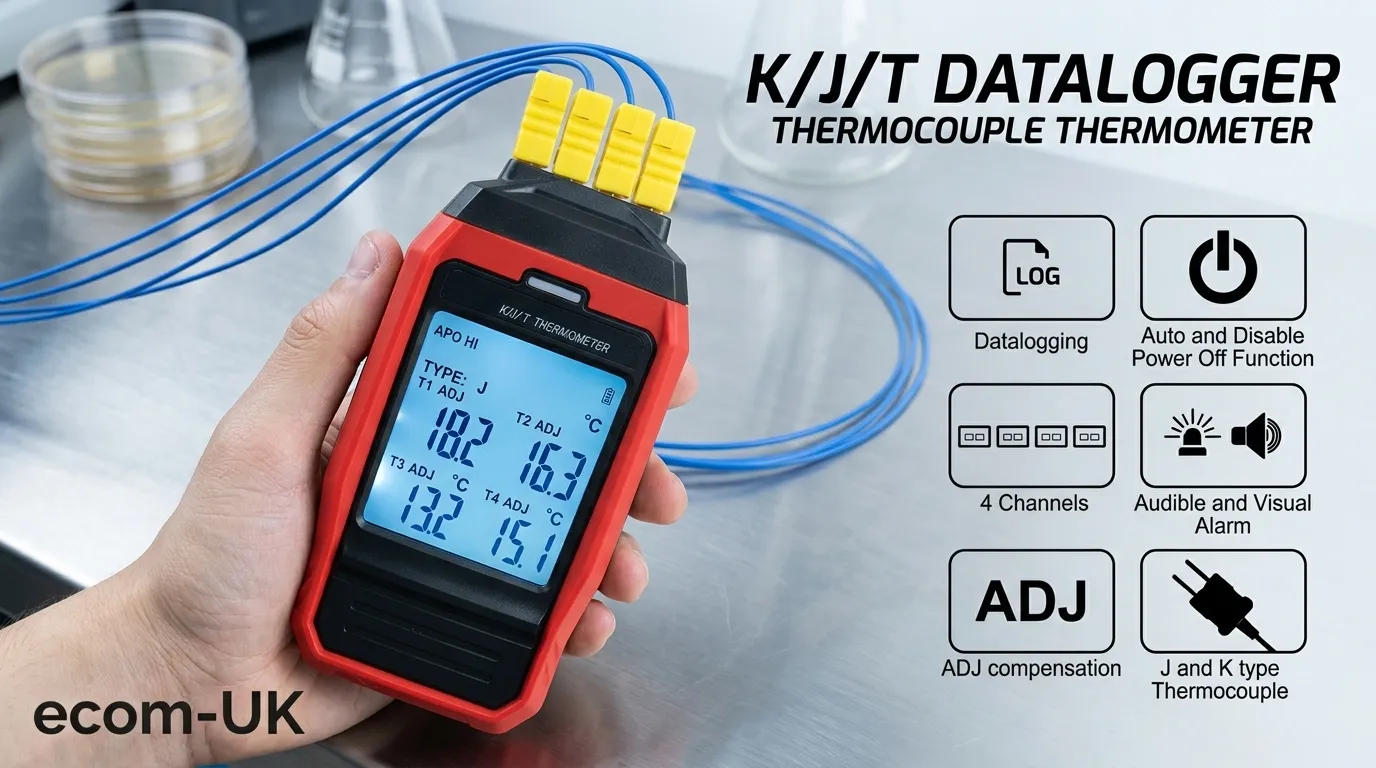
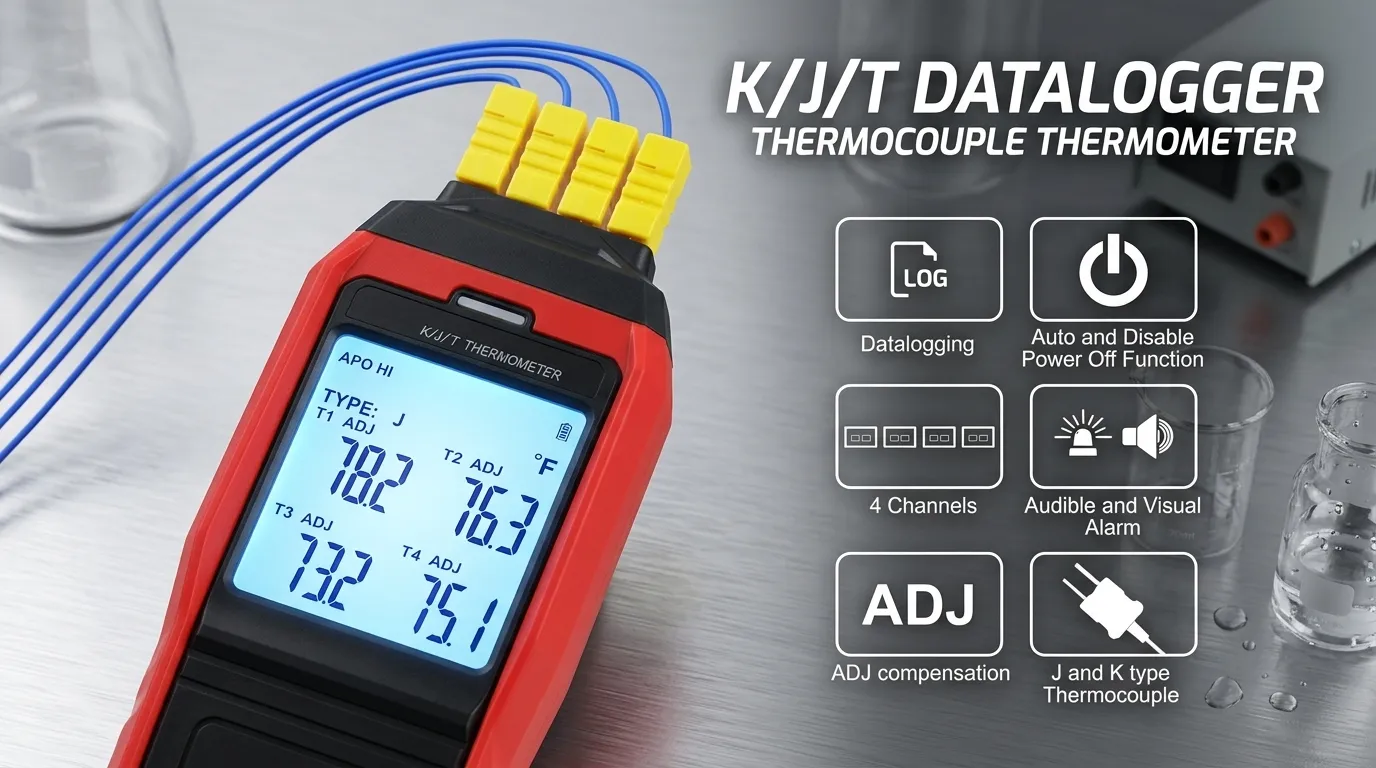
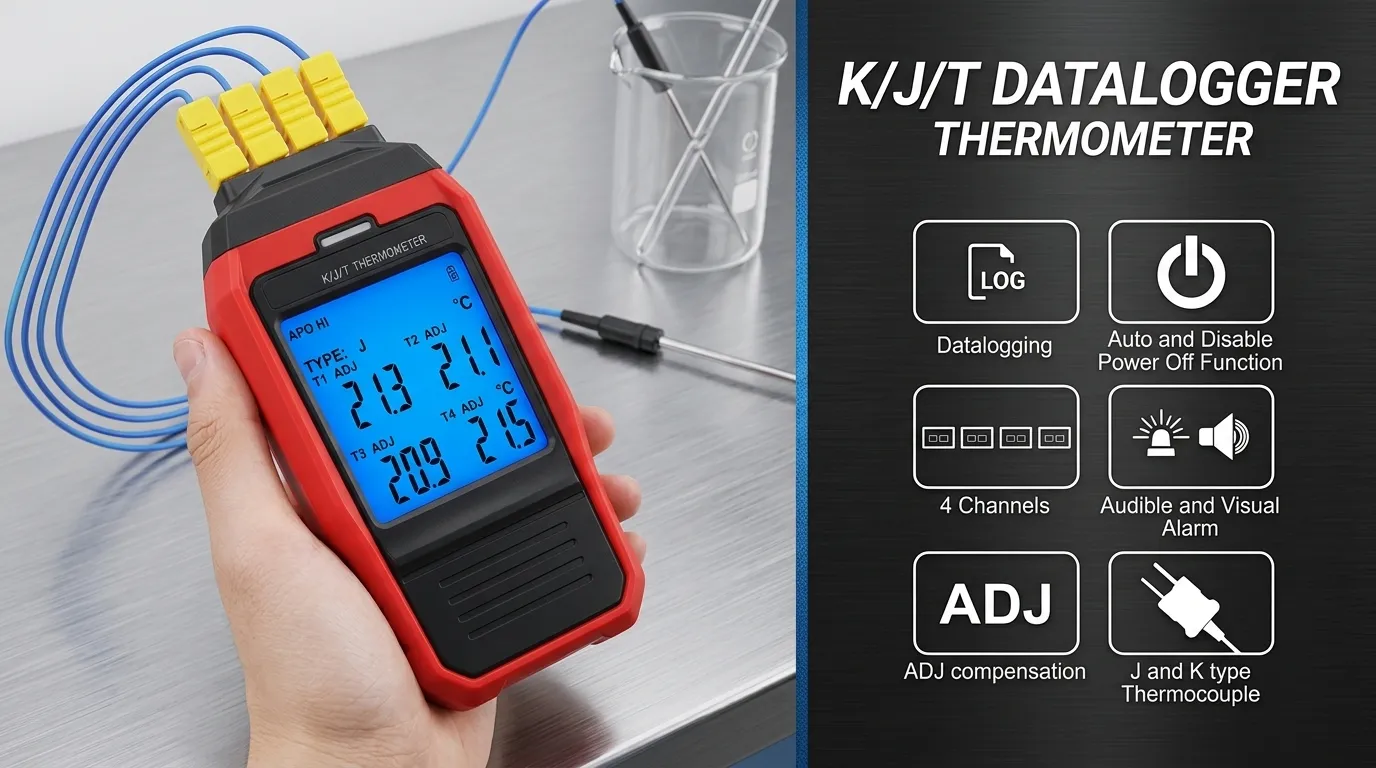
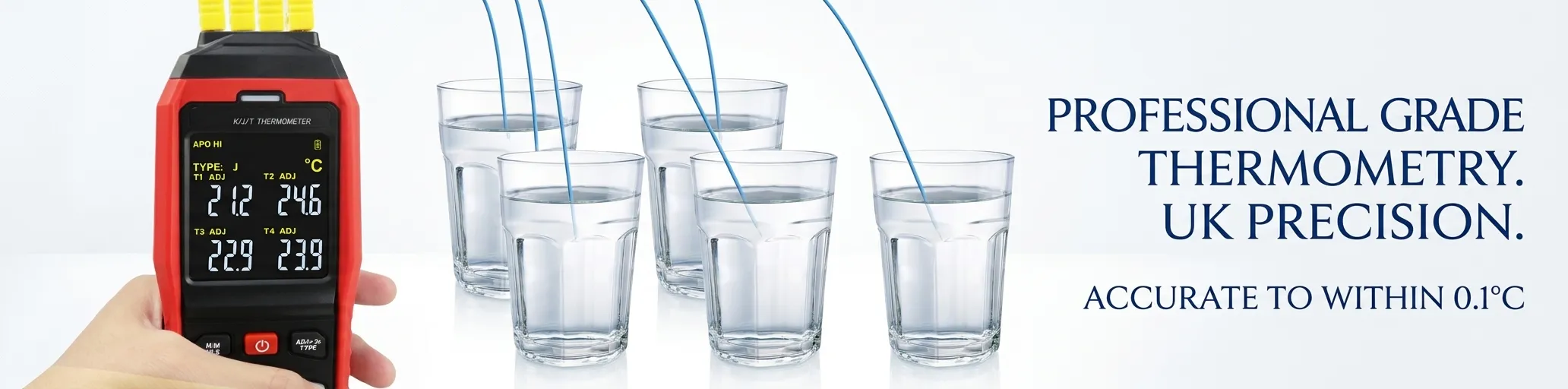
For food compliance, you need ±0.5°C or better. Pharmaceutical applications often demand ±0.3°C. Multi-channel units that accept external thermocouple probes — K-type being the most common — give you flexibility to monitor multiple zones from one device. If you're working with thermocouples, understanding the differences between probe types matters. gainexpress has a useful breakdown of K-type vs J-type thermocouples that's worth a look.
Alert Configuration
Look for systems offering configurable high/low thresholds with adjustable delay times. You don't want an alert every time someone opens a fridge door for 30 seconds. A 5–10 minute delay before triggering is standard practice — long enough to filter out normal operational fluctuations, short enough to catch genuine failures.
Cloud Platform & Reporting
The software matters as much as the hardware. Can it generate HACCP-compliant reports automatically? Does it store data for the minimum two years required by most UK food safety regulations? Can multiple users access it simultaneously? These aren't nice-to-haves — they're essentials.
Calibration Traceability
Every logger should come with a calibration certificate traceable to national standards. Recalibration intervals of 12 months are typical for food applications, though pharmaceutical environments may require six-monthly checks. Gainexpress provides guidance on how to calibrate K-type thermocouple meters that applies to many data logger probe types.
For spot-checking and verification, many facilities also keep an industrial infrared thermometer or IR pyrometer on hand. These non-contact tools — sometimes called an infrared pyrometer or industrial pyrometer — let you quickly verify surface temperatures without disturbing product packaging. A high temperature pyrometer is particularly useful in manufacturing environments where process temperatures exceed what standard loggers can handle. You can buy measuring instruments online UK from specialists like Gainexpress who stock both continuous monitoring and spot-check tools, including hand held pyrometer options and non-contact thermometers for HVAC applications.
Sector-Specific Applications Across UK Industries
Food Service & Hospitality
This is where I've got the most direct experience. Running a bar, you've got bottle fridges, cellar cooling, maybe a small kitchen with walk-in cold storage. The FSA doesn't care that you're a small operation — the rules apply equally. A wireless temperature data logger in each critical unit, feeding to a single app on your phone, means you're covered without adding another task to an already mental shift., popular across England
Typical setup for a pub or restaurant: two to four sensors covering walk-in fridge, walk-in freezer, prep fridge, and display units. Total investment: £200–£500 including gateway. That's less than the cost of one spoilage incident.
Pharmaceutical Distribution
GDP compliance requires continuous monitoring during storage and transit. Multi-channel wireless loggers with four inputs can monitor different zones within a single warehouse — floor level, mid-height, ceiling, and near doors where temperature variation is greatest. The MHRA expects you to map your storage areas and place sensors at identified hot and cold spots.
Logistics & Transport
Fleet monitoring is where wireless really shines. GPS-enabled temperature loggers transmit data via cellular networks, giving dispatchers real-time visibility of every vehicle's cargo temperature. If a refrigeration unit fails mid-journey, you know immediately — not when the driver arrives and opens the doors.
Laboratory & Research
Ultra-low temperature monitoring (-80°C freezers for sample storage) demands specialist sensors. Standard wireless loggers won't cut it here. Look for units specifically rated for cryogenic ranges with probe materials that won't become brittle.
Industry insight: The UK cold chain logistics market is projected to reach £18.2 billion by 2027, with wireless monitoring adoption growing at approximately 23% year-on-year since 2024.
Installation & Calibration: Getting It Right First Time
Buying the kit is the easy part. Proper installation determines whether your system actually protects you during an audit — or just gives you a false sense of security.
Sensor Placement
Don't just stick a sensor wherever it's convenient. Temperature mapping should identify the warmest and coldest points in each storage area. Place sensors at these extremes, not in the middle where readings look reassuringly stable. For a standard walk-in cold room, you want a minimum of two sensors — one near the door (warmest) and one at the back or top (coldest).
Gateway Positioning
Your wireless gateway or hub needs reliable power and network connectivity. Position it centrally relative to your sensors, avoiding metal obstructions where possible. Most systems support 10–30 sensors per gateway, so plan your infrastructure accordingly.
Calibration Schedule
My mate who runs a catering supply company swears by quarterly verification checks — comparing logger readings against a reference thermometer — with full UKAS-traceable recalibration annually. That said, if your readings are consistently within spec at quarterly checks, annual recalibration is generally accepted for food applications.
For those managing building environments alongside cold chain — say, ensuring your premises heating works efficiently to maintain ambient conditions — understanding your wider HVAC system matters too. Gainexpress has a practical guide on how to balance radiators that's relevant for maintaining stable ambient temperatures in storage areas., with availability in Scotland
Environmental Considerations
Condensation kills electronics. If you're placing loggers in high-humidity environments (which most cold rooms are), ensure they're rated to at least IP65 or housed in appropriate enclosures. Battery performance also drops significantly below -20°C — factor in more frequent battery changes for freezer-mounted units. Worth pencilling a reminder into your maintenance calendar rather than waiting for a low-battery alert at 2am.
Some facilities also use a VLT meter for window tint to assess how much solar heat gain affects storage areas with glazing — particularly relevant for pharmacies with south-facing windows. Similarly, grounds maintenance teams might use a 3 in 1 soil moisture light pH meter for landscaping around temperature-sensitive buildings, though that's obviously a different application entirely. Knowing how to use a soil moisture meter won't help your cold chain, but it shows the breadth of measurement tools available from specialists like GAINEXPRESS.
Frequently Asked Questions
How often should a wireless temperature data logger be calibrated?
For UK food safety compliance, annual UKAS-traceable calibration is the accepted standard, with quarterly verification checks against a reference thermometer recommended as best practice. Pharmaceutical applications under MHRA guidelines may require six-monthly calibration. Each calibration should confirm accuracy within ±0.5°C for food or ±0.3°C for pharma applications.
What temperature range do wireless loggers cover?
Most wireless temperature loggers cover -40°C to +125°C with internal sensors. External thermocouple probes (K-type) extend this to -200°C to +1,370°C for specialist applications. Standard food and pharma monitoring typically requires a -30°C to +70°C range, which all mainstream units handle comfortably with ±0.3°C to ±0.5°C accuracy.
Can wireless loggers work inside metal cold rooms?
Yes, but Wi-Fi signals struggle through metal panels. RF-based systems operating at 868 MHz penetrate metal-clad cold rooms far more reliably, with effective ranges of 100–300 metres through obstacles. Alternatively, some systems use a small antenna or repeater mounted outside the cold room, connected to the internal sensor via a cable pass-through.
How long do batteries last in wireless temperature loggers?
Battery life ranges from six months to three years depending on transmission frequency and operating temperature. Loggers transmitting every 15 minutes at room temperature typically achieve 18–24 months. Units in freezer environments (-18°C or below) see reduced battery life of 6–12 months due to cold affecting lithium cell performance. Always keep spare batteries on site.
What happens to data if the Wi-Fi connection drops?
Quality wireless loggers store data locally during connectivity outages — typically 16,000 to 500,000 readings depending on the model. Once connection is restored, stored readings sync automatically to the cloud platform with original timestamps intact. This ensures no gaps in your compliance records even during network failures lasting days or weeks.
Do I need a wireless temperature data logger for a small pub or restaurant?
Legally, you need documented temperature monitoring — wireless isn't mandatory but it's the most reliable method. A basic two to three sensor wireless system costs £150–£350 and eliminates the risk of missed manual checks. Environmental Health Officers increasingly expect digital records, and automated systems demonstrate due diligence far more convincingly than handwritten logs during inspections.
Key Takeaways
- Wireless temperature data loggers automate compliance — they eliminate manual recording errors and provide tamper-proof, timestamped records that satisfy FSA, MHRA, and HACCP audit requirements.
- Real-time alerts prevent costly spoilage — push notifications within 1–5 minutes of a temperature excursion mean you can intervene before stock is lost, typically saving hundreds to thousands of pounds per incident.
- RF beats Wi-Fi in cold rooms — for metal-clad environments, 868 MHz RF systems provide reliable 100–300 metre range where Wi-Fi signals fail to penetrate.
- Annual calibration is the minimum — UKAS-traceable calibration yearly with quarterly verification checks keeps you audit-ready and ensures ±0.5°C accuracy is maintained.
- ROI is typically under six months — between reduced spoilage, labour savings of four to six hours monthly, and avoided compliance penalties (up to £20,000 for food safety breaches), the investment pays for itself quickly.
- Battery management is critical in freezers — expect 6–12 month battery life at -18°C versus 18–24 months at ambient temperatures. Schedule replacements proactively.
- Local data backup protects against connectivity gaps — choose loggers with minimum 16,000-reading internal storage to ensure continuous records during network outages.
Ready to try GainExpress?
Shop Now — £71.37