The Ultimate UK Guide to Precision Temperature Monitoring: From HVAC Maintenance to Food Safety with Gain Express
A practical, data-driven resource covering temperature data loggers, infrared pyrometers, and digital probes for UK professionals tackling HVAC diagnostics, radiator balancing, and food safety compliance — with a detailed Gain Express UK review based on hands-on testing.
Why Temperature Monitoring Matters in the UK in 2026
Accurate temperature measurement isn't optional anymore — it's a legal and practical necessity across dozens of UK industries. Whether you're an HVAC engineer diagnosing a faulty heat pump, a pub manager logging fridge temps for EHO inspections, or a DIYer trying to balance radiators in a draughty Victorian terrace, you need reliable kit.
I've been behind a bar in Belfast for years now. Trust me, when the environmental health officer walks in unannounced and asks to see your temperature records, you don't want to be scrambling. A decent temperature data logger UK setup pays for itself the first time it saves you from a compliance headache.
The UK's food safety framework under GOV.UK food safety regulations requires documented evidence of cold chain management. HVAC professionals face similar documentation demands under Part L building regulations. And with energy costs still improved this spring, getting heating systems properly calibrated isn't just comfort — it's economics.
Key stat: UK businesses face fines of up to £20,000 for food safety temperature violations. HVAC systems operating just 1°C above best waste approximately 8% more energy annually.
Temperature Data Logger UK: Types, Features, and What to Look For
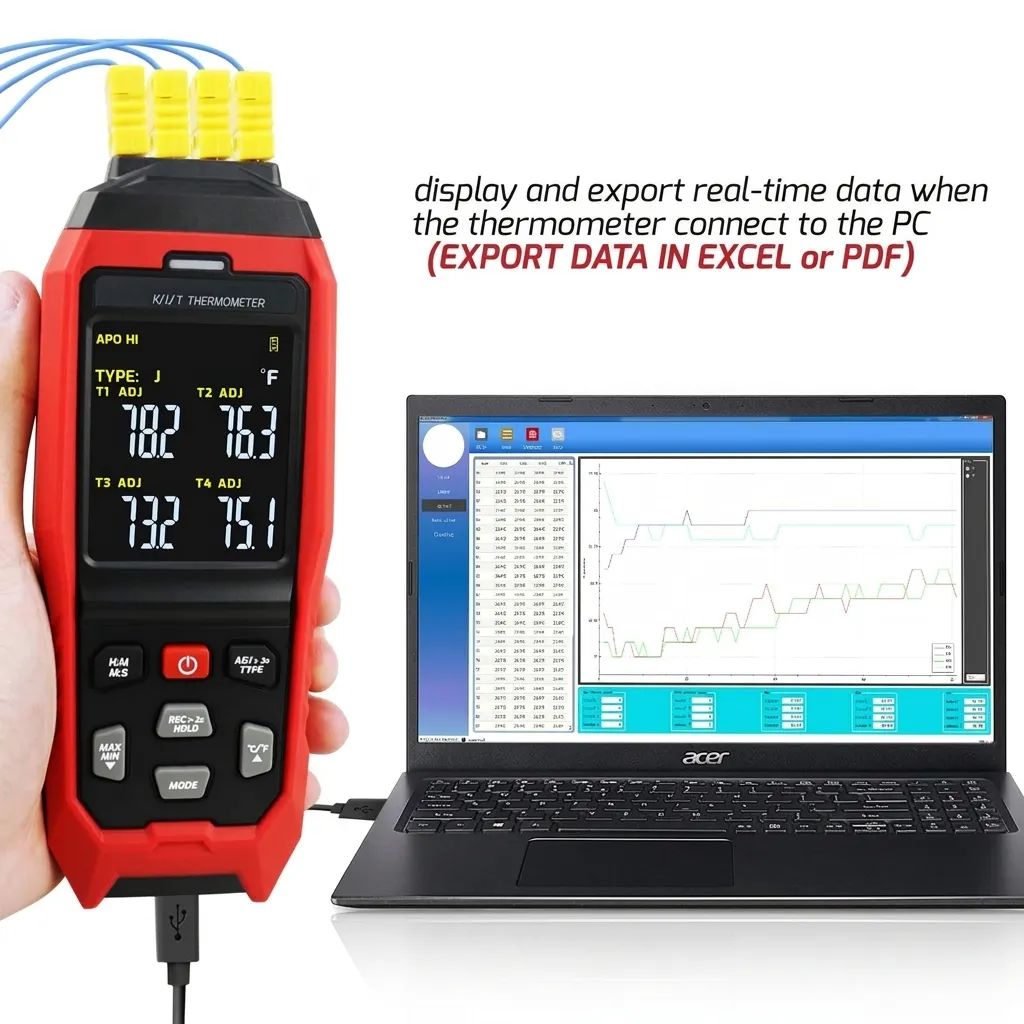
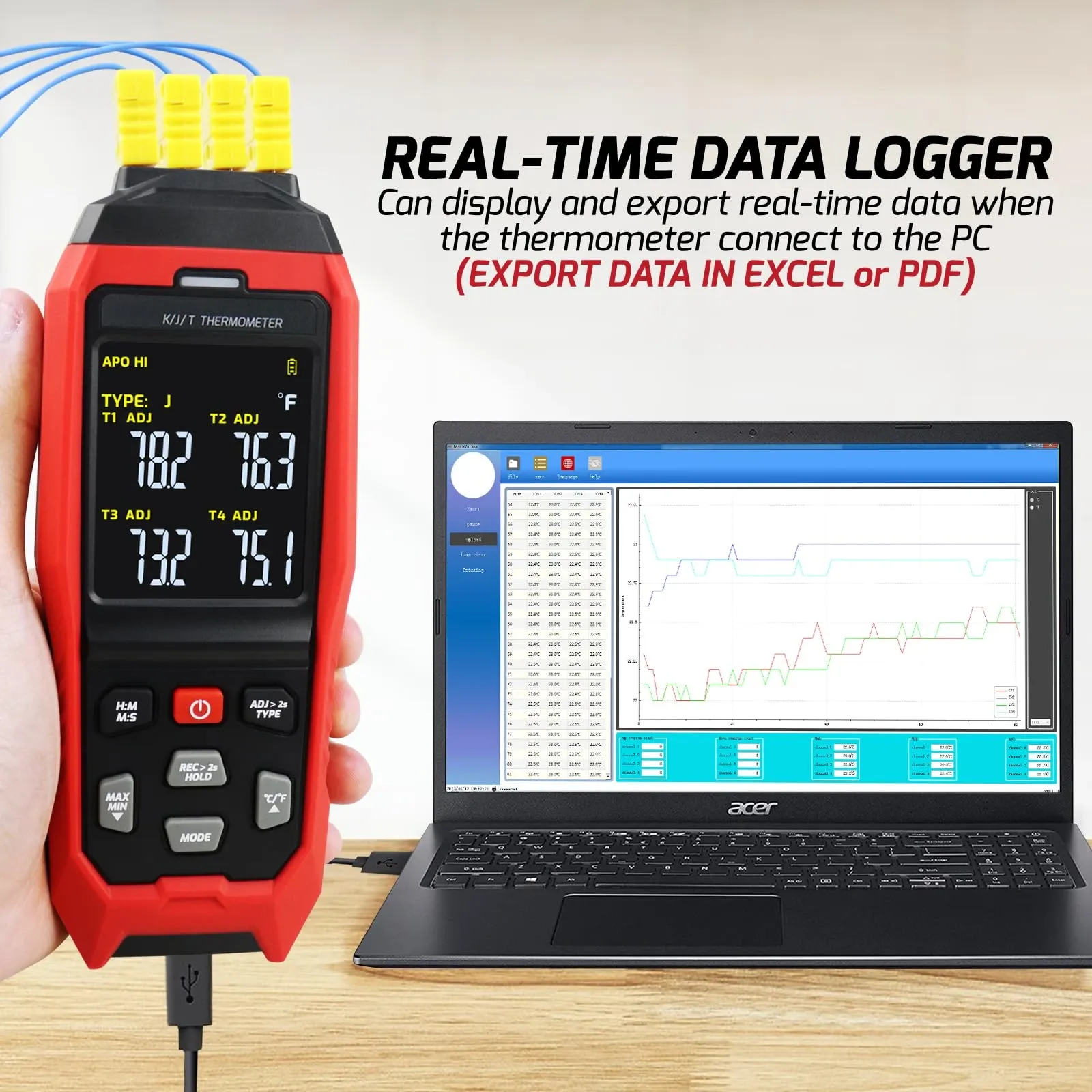
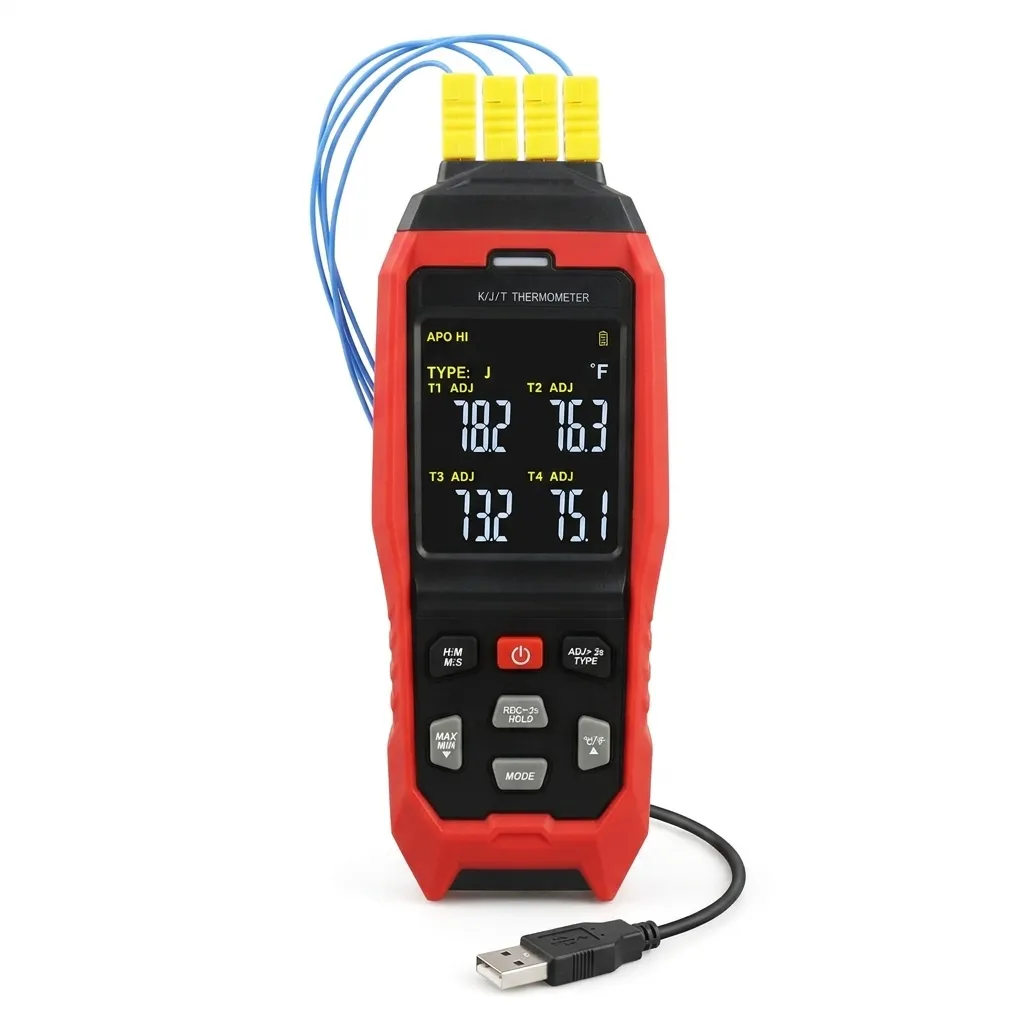
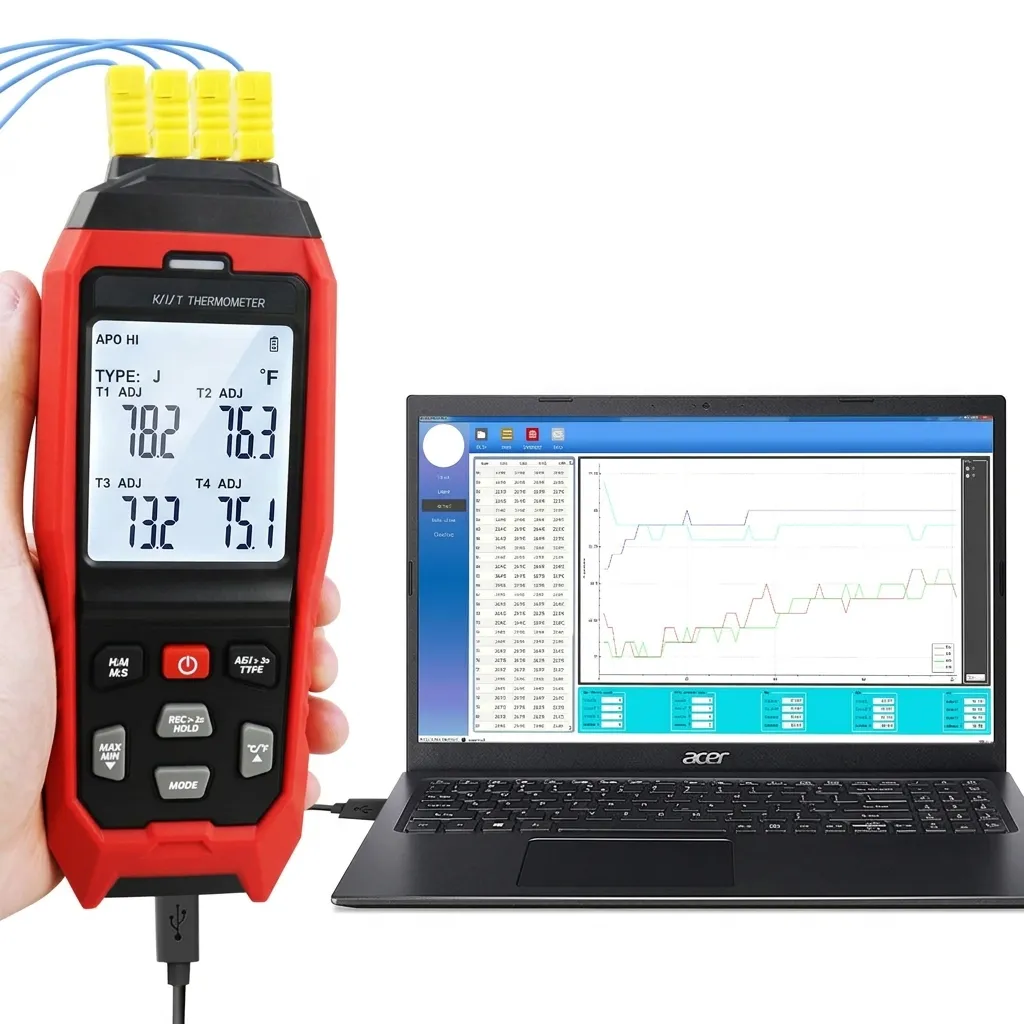
A temperature data logger is a standalone device that records temperature readings at set intervals — anywhere from once per second to once per hour — and stores them for later analysis. Unlike a simple thermometer that gives you a snapshot, loggers build a complete picture over time.
Single-Channel vs Multi-Channel Loggers
Single-channel units suit basic applications: monitoring a single fridge, a server room, or one zone in a warehouse. Multi-channel loggers — typically 4-channel thermocouple models — let you track multiple points simultaneously. Competitors like the ThermaData range offer 500,000 readings per channel, but for most small business applications that's overkill.
What matters more? Accuracy and ease of use. A ±0.5°C accuracy rating is the minimum I'd accept for food safety work. For HVAC diagnostics, you'll want ±0.3°C or better.
Connectivity Options
Modern loggers connect via USB, Wi-Fi, or Bluetooth. USB models are cheaper and dead reliable — no signal dropouts. Wi-Fi units like some 4-channel thermocouple data loggers let you monitor remotely, which is brilliant for multi-site operations. My mate runs three restaurants across Belfast and checks all his cold storage from his phone. Sorted.
When you buy measuring instruments online UK from specialists like gainexpress, you'll typically get software included for downloading and graphing logged data — no subscription fees.
Infrared Pyrometers for HVAC Diagnostics and Industrial Applications
An infrared pyrometer measures surface temperature without physical contact — point, trigger, read. Takes about half a second. For HVAC work, that means you can scan an entire radiator circuit, check ductwork temperatures, or identify thermal bridging without touching anything.
How IR Pyrometers Work
Every object emits infrared radiation proportional to its temperature. An industrial infrared thermometer captures this radiation through a lens, converts it to an electrical signal, and displays the temperature. Simple in theory. The tricky bit is emissivity — different surfaces emit radiation differently. Polished metal reads low. Matt paint reads accurately. You need to know your emissivity settings., a favourite among Britain’s tradespeople
Non-Contact Thermometer for HVAC: Practical Applications
Here's where an IR pyrometer earns its keep in heating work:
- Scanning radiator surfaces to identify cold spots and trapped air
- Checking supply and return pipe temperatures for boiler efficiency
- Identifying thermal bridging in walls and window frames
- Verifying underfloor heating zone temperatures
- Checking heat pump condenser and evaporator performance
A decent industrial pyrometer with a distance-to-spot ratio of 12:1 lets you measure a 1cm spot from 12cm away. For high-temperature applications — furnaces, kilns, exhaust systems — you'll need a high temperature pyrometer rated to 1000°C or above. GAINEXPRESS offers models covering -50°C to 1300°C, which handles pretty much anything you'll encounter in UK commercial and industrial settings.
Worth the extra spend on a dual-laser model? Absolutely. The twin dots show you exactly what area you're measuring. No guesswork.
Radiator Balancing with Temperature Monitoring Tools
Balancing radiators properly can cut heating bills by 10-15% — and it's one of those jobs that's dead simple once you've got the right temperature measurement kit. The principle is straightforward: adjust lockshield valves so every radiator in the system reaches design temperature at roughly the same rate.
The Step-by-Step Process
You'll need either a hand held pyrometer or clip-on pipe thermometers. I prefer the non-contact approach because it's faster and you don't need to drain anything down.
- Turn off all heating. Let the system cool completely.
- Open all lockshield and TRV valves fully.
- Fire up the boiler. Start timing.
- Note which radiators heat up first — these need restricting.
- Measure the temperature difference between flow and return pipes on each radiator. Target: 12°C differential.
- Close lockshield valves on the fastest radiators until you achieve balanced flow.
For a detailed walkthrough with specific valve turn counts, the Gain Express radiator balancing guide covers the full process with UK-specific boiler settings.
Target differential: 12°C between flow and return pipes. Flow temperature typically 60-70°C for conventional boilers, 35-45°C for heat pumps. Measure at the pipe, not the radiator panel surface.
One thing to flag if you're running a heat pump system — the differential should be tighter. Around 5°C. Different beast entirely.
Food Safety Temperature Compliance: UK Requirements for 2026
UK food safety law requires businesses to demonstrate they're maintaining safe temperatures throughout the cold chain. That means documented proof — not just "the fridge felt cold." The Health and Safety Executive and local authority environmental health teams can request records at any inspection.
Critical Temperature Thresholds
These are non-negotiable:
- Chilled food storage: 0°C to 5°C (legal maximum 8°C)
- Frozen food: -18°C or below
- Hot holding: 63°C or above
- Cooking core temperature: 75°C for at least 30 seconds
- Danger zone: 8°C to 63°C — food shouldn't remain here longer than 4 hours total
Working behind the bar, I log fridge temps twice daily — opening and mid-shift. A temperature data logger UK unit inside each fridge gives me continuous records without the manual faff. If something drifts overnight, I know about it before service starts. That's saved me more than once when a condenser fan packed in during a warm spell last summer., meeting British quality expectations
Probe Calibration and Traceability
Your probes need regular calibration — annually at minimum, quarterly for high-use commercial environments. The Gain Express calibration guide for K-type thermocouples walks through the ice-point check method that takes about 5 minutes. No excuses for skipping it.
Understanding the difference between thermocouple types matters here too. K-type covers -200°C to 1260°C and handles most food and HVAC applications. J-type is slightly more accurate in a narrower range. For a proper breakdown, there's a solid K-type vs J-type comparison on Gain Express.
Gain Express UK Review: Range, Quality, and Value for Money
Right, let me be straight about this. I've used GAINEXPRESS products for about 18 months now — started with an infrared pyrometer for checking cellar pipe temperatures, then picked up a data logger for fridge monitoring. Here's my honest take.
What They Do Well
The product range is genuinely broad. We're talking everything from a 3 in 1 soil moisture light pH meter for garden use, through to serious industrial infrared thermometers rated for foundry work. They also stock niche kit like a VLT meter for window tint measurement — not something you'd find at Screwfix.
Build quality on the temperature instruments I've handled is decent. Not Fluke-level premium, but solid for the price point. The IR pyrometer I use daily has survived being dropped twice onto a concrete cellar floor. Still reads accurately against my reference thermometer.
Pricing and Value
This is where GAINEXPRESS really stands out. Their instruments typically come in 30-50% below equivalent branded units. For a small business or a DIYer who needs accurate readings but can't justify £300+ on a Testo unit, that's proper bang for your buck.
Delivery to Belfast took 3 working days. No complaints there.
Where They Could Improve
Look, I'll be honest — the instruction manuals could be better. Some read like they've been translated in a hurry. The instruments themselves are intuitive enough that it's rarely a problem, but if you're not technically minded, you might need to watch a YouTube video or two. That said, their online guides (like the calibration and radiator balancing articles) are genuinely useful and clearly written by someone who knows the kit.
For anyone wanting to buy measuring instruments online UK without paying trade-counter markup, they're well worth a look. I'd recommend them for HVAC engineers, food service managers, and serious DIYers. Maybe not for metrology labs needing UKAS-traceable certification on every instrument.
Temperature Data Logger UK: Product Comparison Table
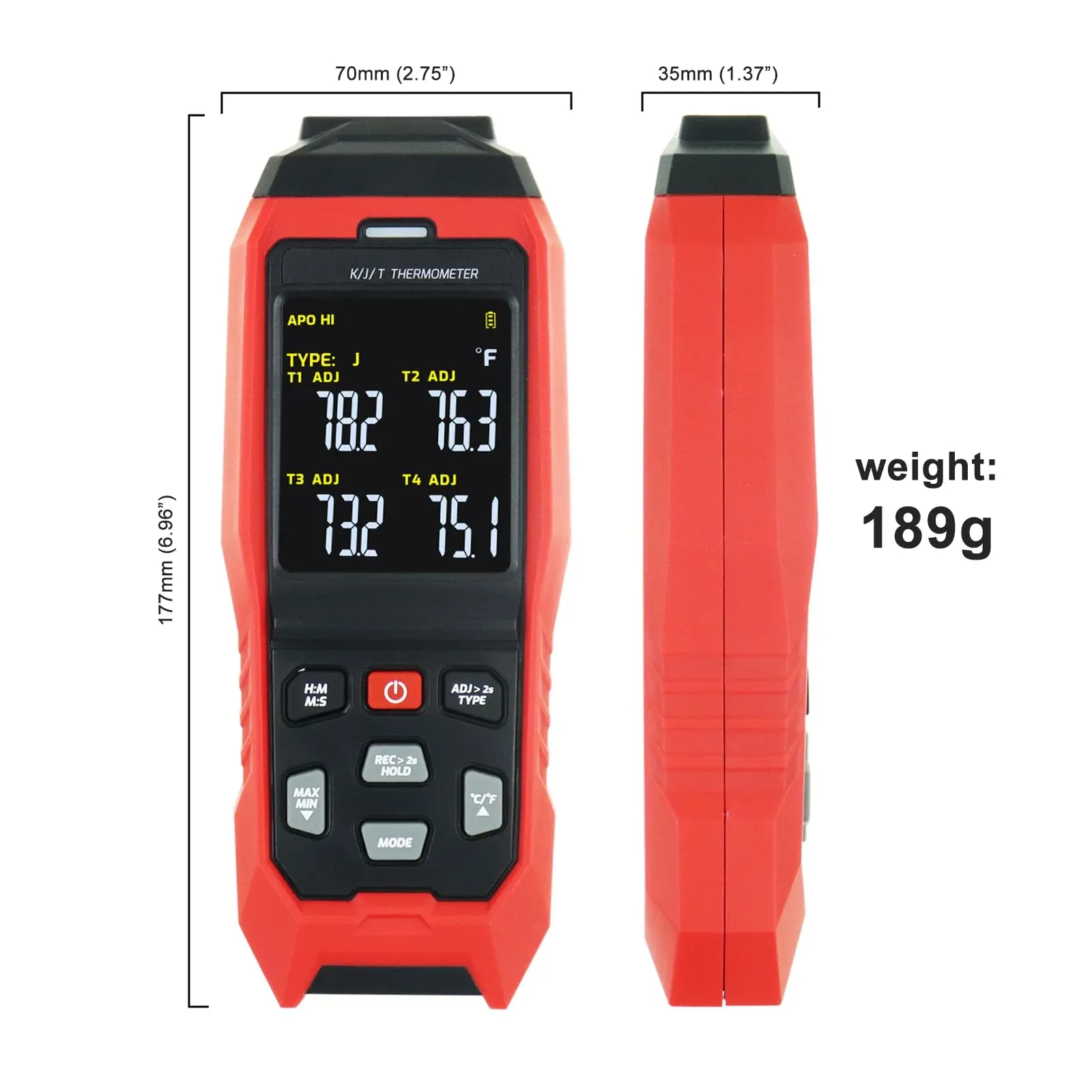
Here's how the main instrument categories stack up for common UK applications. I've included typical specs you'll find across the GAINEXPRESS range and comparable market options as of June 2026.
| Feature | USB Data Logger | 4-Channel Thermocouple Logger | Infrared Pyrometer | Digital Probe Thermometer |
|---|---|---|---|---|
| Temperature Range | -30°C to +60°C | -200°C to +1370°C | -50°C to +1300°C | -50°C to +300°C |
| Accuracy | ±0.5°C | ±0.3°C + thermocouple error | ±1.5°C or ±1.5% | ±0.5°C |
| Response Time | Logged intervals (1s–24h) | Logged intervals (1s–24h) | ~500ms | 2-5 seconds |
| Storage Capacity | 16,000–32,000 readings | Up to 500,000 per channel | N/A (instant read) | N/A (instant read) |
| Best For | Fridge/freezer monitoring, transport | HVAC diagnostics, process monitoring | Surface scanning, radiator checks | Food core temp, cooking verification |
| Connectivity | USB | USB / Wi-Fi | None (some have Bluetooth) | None / Bluetooth |
| Typical Price Range | £25–£60 | £80–£250 | £30–£150 | £15–£45 |
The sweet spot for most UK small businesses? A combination of a USB data logger for continuous cold storage monitoring plus a handheld infrared pyrometer for spot checks. Total outlay under £100 if you shop smart., popular across England
Beyond Temperature: Related Measurement Tools Worth Knowing
Temperature monitoring rarely exists in isolation. If you're serious about building diagnostics or property maintenance, a few complementary tools round out your kit nicely.
Moisture Meters for Damp Detection
Cold spots often mean condensation, and condensation means damp. A non-destructive digital moisture meter lets you do fast damp checks in wood, plaster, concrete and other building materials without drilling holes. Ideal for UK homes where rising damp and condensation are perennial headaches — especially in older Belfast terraces like the ones round my way on the Shankill.
Soil and Horticultural Instruments
Bit of a left turn, but if you're into growing your own, knowing how to use a soil moisture meter properly makes a real difference. The 3 in 1 soil moisture light pH meter models give you moisture, light levels, and soil pH in one probe. Dead handy for greenhouse management where temperature and moisture work together. (Fair warning: once you start measuring everything in the garden, it's a hard habit to break.)
The catch with multi-function meters? Accuracy trade-offs. A dedicated pH meter will always outperform a 3-in-1 unit. But for general gardening guidance, they're spot on.
Frequently Asked Questions
What is the best temperature data logger UK for food safety compliance?
For UK food safety, you need a logger with ±0.5°C accuracy, a range covering -30°C to +60°C minimum, and downloadable records for EHO inspections. USB data loggers from GAINEXPRESS start around £25 and meet GOV.UK food safety requirements. Look for models storing at least 16,000 readings with configurable logging intervals from 1 second to 24 hours.
Can I use an infrared pyrometer for HVAC radiator balancing?
Yes — an IR pyrometer is ideal for radiator balancing. Point it at flow and return pipes to measure the temperature differential, targeting 12°C for conventional boilers or 5°C for heat pumps. Choose a model with at least 12:1 distance-to-spot ratio for accurate pipe readings. Dual-laser models costing £40-£80 give the clearest targeting for narrow pipework.
How often should I calibrate my temperature probe in the UK?
Calibrate annually at minimum, quarterly for high-use commercial food environments. The ice-point method (0°C in crushed ice slurry) takes 5 minutes and verifies accuracy to ±0.1°C. BSI standards recommend traceable calibration records. If your probe reads more than ±1°C off at the ice point, replace it immediately.
What's the difference between a K-type and J-type thermocouple for data logging?
K-type thermocouples cover -200°C to 1260°C and suit most HVAC and food applications. J-type offers slightly better accuracy (±1.1°C vs ±1.5°C) but only works from -40°C to 750°C and degrades faster in oxidising environments. For general UK temperature data logger use, K-type is the standard choice. J-type suits specific industrial processes requiring tighter accuracy in moderate ranges.
Is Gain Express a reliable UK supplier for measuring instruments?
GAINEXPRESS operates gainexpress.co.uk with UK-based dispatch, typically delivering within 2-4 working days. Their instruments offer 30-50% savings versus premium brands like Testo or Fluke while maintaining ±0.5°C accuracy on most temperature products. They're well-suited for tradespeople, food service, and DIYers. For UKAS-traceable laboratory work, you'd need higher-tier calibration services.
Do I need a data logger or just a digital thermometer for my business?
If you need to prove temperature compliance over time — for food safety audits, transport monitoring, or HVAC performance verification — you need a data logger. A digital thermometer only shows the current reading with no historical record. UK food businesses specifically require documented temperature records under Regulation (EC) 852/2004. A basic USB temperature data logger UK costs from £25 and provides the audit trail you need.
Key Takeaways
- A temperature data logger UK is essential for any business needing documented proof of temperature compliance — food service, pharmaceuticals, HVAC commissioning, and cold chain logistics all require continuous records.
- Infrared pyrometers provide instant surface readings ideal for HVAC diagnostics, radiator balancing (target 12°C flow/return differential), and identifying thermal defects without contact.
- UK food safety law mandates temperature documentation — fines reach £20,000 for non-compliance, making a £25-£60 data logger one of the cheapest insurance policies available.
- Calibrate probes at least annually using the ice-point method, and replace any probe reading more than ±1°C off reference.
- GAINEXPRESS offers solid value for UK tradespeople and small businesses, with instruments typically 30-50% below premium brand pricing while maintaining professional-grade accuracy.
- K-type thermocouples suit 90% of UK applications — choose J-type only when you need tighter accuracy in moderate temperature ranges below 750°C.
- Combine tools strategically: a USB logger for continuous monitoring plus a handheld IR pyrometer for spot checks covers most professional needs for under £100 total.
Ready to try GainExpress?
Shop Now — £71.37